
Sex Offender Checks in Clinton County
The Michigan Public Sex Offender Registry, or PSOR, is the main public search channel for Clinton County. Michigan State Police maintains it under the Sex Offenders Registration Act. Searchers can filter the state data to Clinton County, search a person by name, use an address or ZIP code, enter a registration or MDOC number, or browse published status lists. The registry is free. High traffic can make it briefly unavailable, and Michigan does not offer a full-list download.
Begin with the strongest facts available. A registration number or MDOC number is more precise than a common name. For a name search, compare aliases, photograph, birth date, physical marks, and registration details before deciding that a result identifies the right person. For neighborhood awareness, use the county, address, or map radius controls. The registry omits victim information.
The official Michigan State Police PSOR guidance explains search methods, profile content, status terms, and reporting duties.
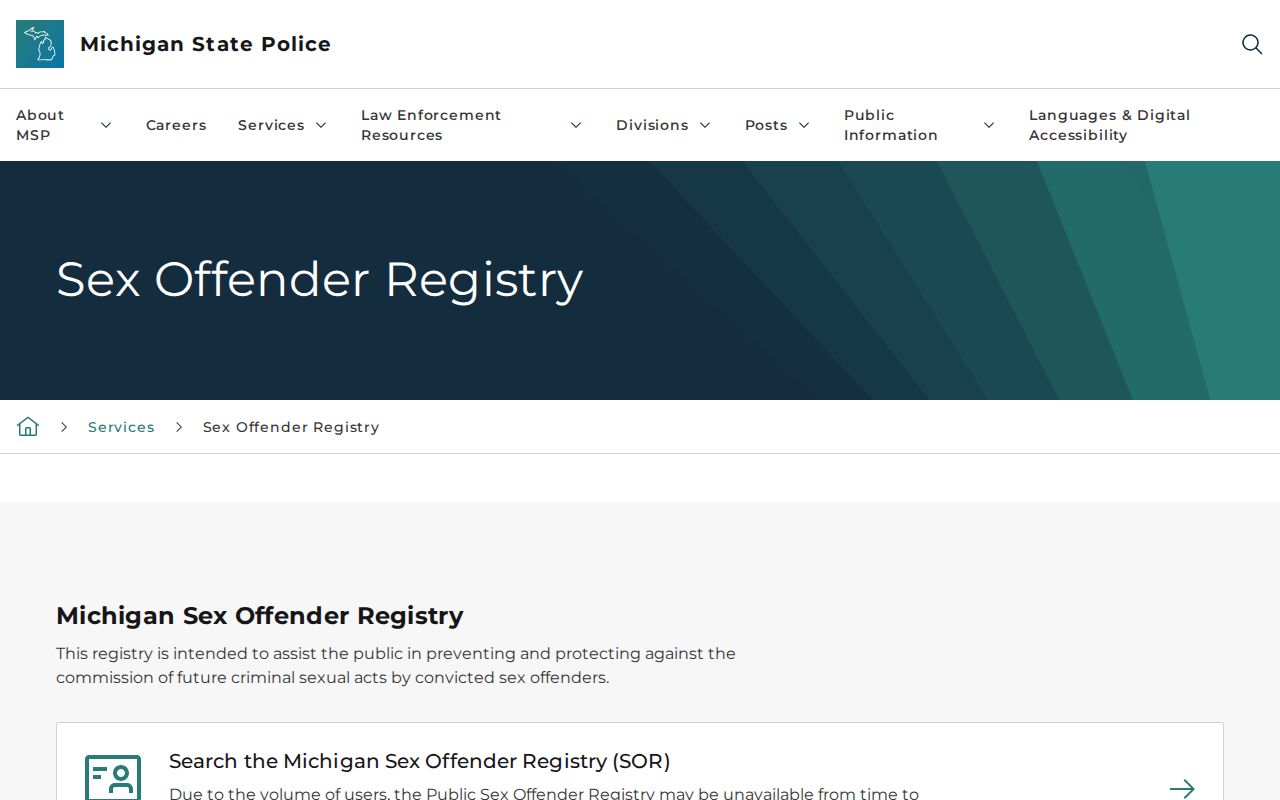
The MSP guidance should be checked with the live PSOR because interface labels and registration rules can change.
Clinton County Registry Map Radius
The PSOR Neighborhood Map accepts a street, city, ZIP code, county, or a mix of those fields. The radius choices are 0.25, 0.50, 1, 2, and 5 miles. A smaller radius can focus on one block or nearby streets. A larger radius gives broader community context, but can cross city, township, and county boundaries.
Map pins depend on the address data available to the registry. The “Map Offender” control is disabled when an address has not been mapped. That gray button does not prove a profile is false or inactive. Read the status, address fields, and registration details first. People listed as homeless, incarcerated, absconders, school-only, or employment-only may not fit a standard home-address map.
Use the map for awareness, not as a boundary survey. The displayed radius is a search control. It does not establish a legal exclusion zone, property line, or prediction of risk. Open each relevant profile and read its current fields rather than counting pins alone.
How to Search the Michigan Public Sex Offender Registry
PSOR supports distinct name, identifier, geographic, map, and published-list searches. Pick the mode that fits the facts in hand. A county filter is best for a broad Clinton County registry view. A name search needs both first and last name, though partial names are accepted. Address searches need the street plus a city, county, or ZIP entry.
- Open Michigan PSOR and read its conditions and public-use warning before entering a query.
- Choose a name, registration number, MDOC number, address, county, ZIP, map-radius, or published-list search.
- Review the result list and compare more than one identifier, especially when names are common or partial.
- Open View Details for the full profile, status, address, listed offense, registration data, vehicle data, and available map controls.
| Field Label | Type | Required | Notes |
|---|---|---|---|
| First Name | Text | Yes for name mode | Both first and last names are needed; partial names are accepted |
| Last Name | Text | Yes for name mode | Use with first name |
| Registration or MDOC Number | Text | No | Either identifier can support a direct search |
| Street Address | Text | Conditional | Add a city, county, or ZIP for registry-search mode |
| City / County / ZIP | Text or select | No | Select Clinton for a countywide result set |
| Neighborhood Map Radius | Map and select | No | Choose 0.25, 0.50, 1, 2, or 5 miles |
| Published Lists | Links | No | View all published, incarcerated, or non-compliant entries |
The live PSOR search interface shows the current name, address, county, list, and map controls.
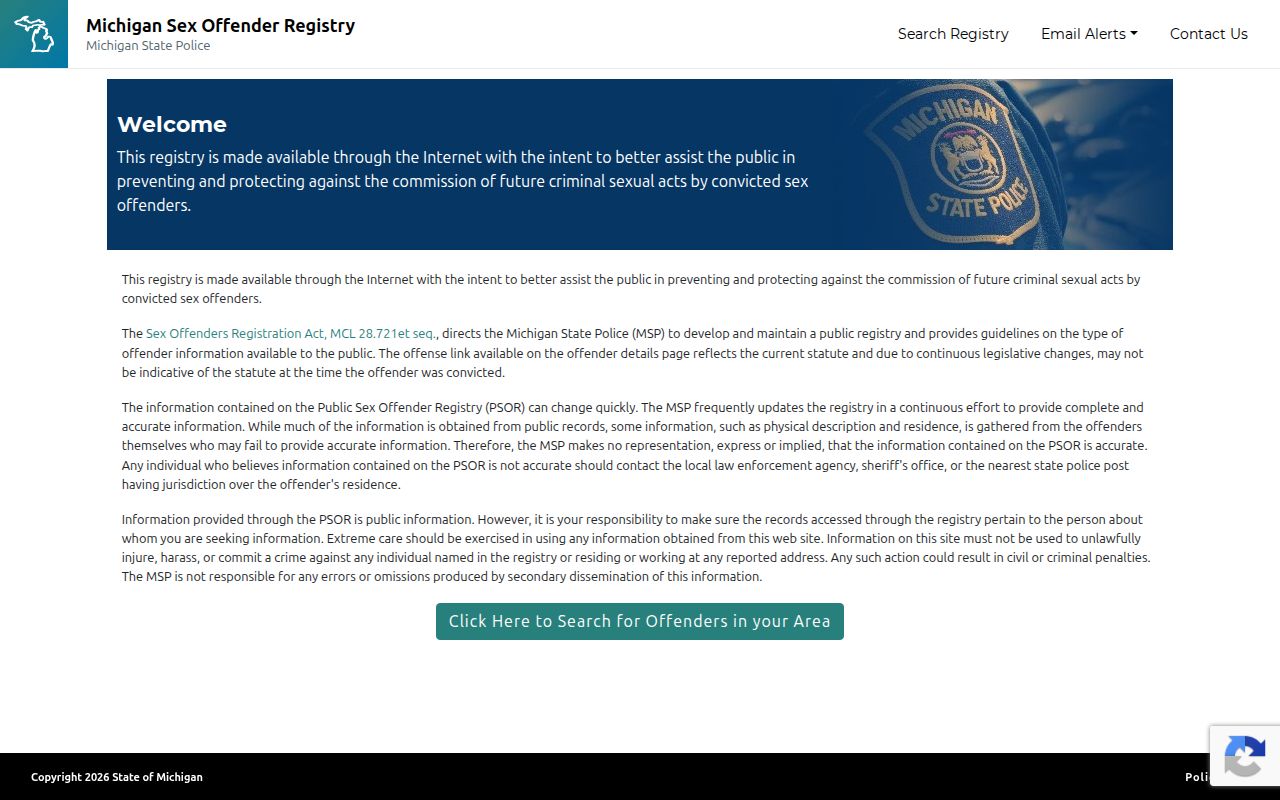
The captured form illustrates why choosing a search mode first is more useful than filling every field at once.
Clinton County Registry Status Labels
PSOR status labels describe a registration condition, not a new criminal judgment. “Active” means the person is currently registered under the displayed status. “Incarcerated” points to custody. “Pending Out of State” and “Inactive Out of State” reflect interstate status. “Absconder” and “Homeless” signal different address circumstances. “School Only” and “Employment Only” can explain why a Michigan connection appears without a standard resident address.
Compliance labels are also specific. PSOR can show Address, Campus, Employment, Failed to Register, Failed to Verify, False Information, and Fee violations. Read the full label and date context. Do not turn “non-compliant” into a guess about the unstated facts. Suspected noncompliance should go through the registry’s Submit a Tip function, local law enforcement, or the MSP Sex Offender Registry line at 517-241-1806.
When a status seems inconsistent with a known court case, compare the registry with the filed case. PSOR and a court docket serve different purposes. A court file can explain the charge, plea, judgment, sentence, or later order that the registry summary does not show.
Inside a Registry Profile
A public PSOR profile combines identification, registration, location, and offense fields. It does not reproduce the full police report or court case. Use the field groups below to check identity and understand why an entry appears, then consult the underlying court when more legal context is needed.
| Name & Aliases | Current public name and aliases reported to the registry |
|---|---|
| Date of Birth & Registration Number | Public identifiers used to distinguish similar names |
| Photo & Physical Description | Photograph plus available scars, marks, and tattoos |
| Registered Locations | Address and available campus, school, or employment information |
| Offense Information | Listed registry offense details; consult the court file for the full case |
| Tier & Registration Details | Statutory tier, duration context, registration status, and compliance fields |
| Vehicle Information | Vehicle data made public under the registry rules |
Victim information is not public. The profile also should not be read as a complete Michigan criminal history. ICHAT, court dockets, jail records, and PSOR all have different scopes. A “not found” result is equally limited because some people or offenses do not appear publicly.
Track Clinton County Registry Changes
PSOR includes a Track Offender feature. Open the person’s View Details page or photograph, choose “Track Offender,” enter the same email address twice, accept the Terms of Use, and submit the registration. MSP says the confirmation should arrive within 24 hours. The notification can cover moves and changes in listed school or employment information.
Tracking one profile is different from searching a neighborhood radius. The tracking tool follows changes tied to a selected entry. A map search finds profiles based on the geographic fields available at the time of the query. People who want ongoing awareness may use both, while remembering that a map can omit an address that has not been geocoded.
Check spam filters if the confirmation does not arrive. Then return to PSOR and verify that the correct profile was selected. An email alert is a prompt to read the current official entry, not a complete copy of every change or the underlying case.
Michigan Registration Levels and Requirements
Michigan uses three statutory tiers. The listed offense and current law control the tier. Do not infer it from an everyday description of the conduct. Verification is tied to the registrant’s birth month, and higher tiers require more frequent checks. Duration can also be affected by offense-specific rules, exclusions, or lawful relief.
| Level / Tier | Duration | Verification Frequency |
|---|---|---|
| Tier I | 15 years | Annual verification |
| Tier II | 25 years | Semiannual verification |
| Tier III | Life | Quarterly verification |
Registrants must report specified address, legal-name, employment, and higher-education changes in person within three business days. Current rules may allow some vehicle, phone, temporary-lodging, or similar updates by in-person, mail, or drop-off methods. MSP lists a one-time $50 initial fee and a $50 annual fee, capped at $550.
MCL 28.722 supplies definitions and the tier framework, while MCL 28.725 addresses registration and reporting duties. The statute should be checked for the specific offense and date rather than reduced to the table alone.
Clinton County Sheriff Registration Office
Local law enforcement, a sheriff’s office, or a Michigan State Police post performs registration and verification work. The Clinton County Sheriff is at 1347 E. Townsend Road, St. Johns, MI 48879, and the main number is 989-224-5200. Call before arriving to confirm the correct registering office, current hours, appointment needs, accepted update method, and any documents required for the specific report.
The office visit belongs to the registrant’s reporting duty. It is not a separate public search counter that replaces PSOR. Members of the public should use PSOR for published information and contact law enforcement to report suspected noncompliance. A tip should state the observed facts without confrontation or speculation.
Clinton County Sheriff
1347 E. Townsend Road
St. Johns, MI 48879
989-224-5200
Confirm registration hours and the proper office before arrival.
Clinton County PSOR and NSOPW
Michigan PSOR is the direct state source for Clinton County registration data. The U.S. Department of Justice National Sex Offender Public Website, or NSOPW, adds a multi-jurisdiction search layer. It queries participating state, territorial, and tribal public registries. Each source still controls its own data, display rules, and update timing.
Use NSOPW when a name, address history, or family safety question crosses a state line. Return to Michigan PSOR for Michigan-specific status details, map tools, and tracking. A missing NSOPW result does not erase a state court record, and a PSOR result does not prove what another jurisdiction currently publishes.
The official National Sex Offender Public Website search is the source for that broader layer.
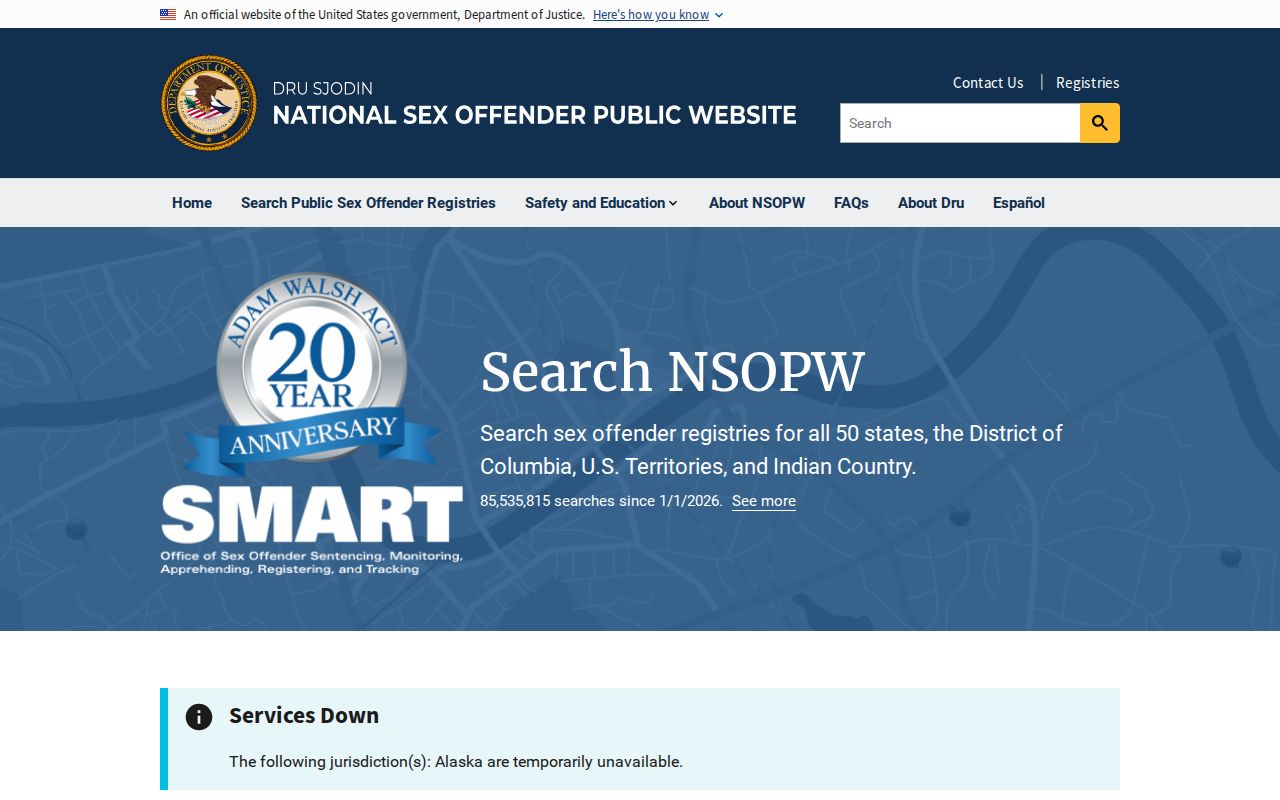
The national search capture shows why NSOPW is best used as a bridge to participating registries, not as a replacement for Michigan PSOR.
Community Notification and Lawful Use
PSOR is a prevention and community-awareness tool. Use it to learn what the state currently publishes, plan personal and family safety, track an official entry, or report facts that may show noncompliance. It is not a prediction that a listed person will reoffend. It also does not authorize a searcher to contact, confront, follow, shame, or punish anyone.
The PSOR landing disclaimer warns that registry information must not be used to unlawfully injure, harass, or commit a crime against a registrant or anyone at a reported address. Such conduct can bring civil or criminal consequences under the law that governs the conduct. Research did not locate a separate Michigan SORA “searcher misuse” crime, so MCL 28.729 should not be cited as one. That section concerns registrant noncompliance.
Use Registry Data Lawfully: Michigan PSOR warns against unlawful injury, harassment, or criminal acts involving a listed person or reported address. Misconduct may carry civil or criminal consequences, but no separate SORA searcher-misuse offense was located.
Report suspected noncompliance through Submit a Tip, the proper local law-enforcement agency, or MSP SOR at 517-241-1806. Give facts, dates, and locations. Do not investigate the person yourself. For the underlying conviction, read the court file rather than assuming the public profile contains the whole case.